The Documented History of the GA911
Provenance

From Ground Zero to Gotham Armory.

The history of the GA911 is inseparable from the steel from which it was made. Every stage—from its recovery and preservation to metallurgical testing, rolling and transformation into Damascus steel—was carefully documented.

01
Origin &
Chain of Custody
02
Material Verification
& Engineering
03
Transformation
into Damascus
Provenance
01
Origin & Chain of Custody
The steel before the GA911.

Before it became part of the GA911, the World Trade Center steel followed a carefully documented path—from its recovery at the site, to a first-responder monument in Freeport, and ultimately into the custody of Gotham Armory.

2002
Steel received from the World Trade Center site
187 lb.
Total steel later transferred to Gotham Armory
Two
Documented transfers in 2017 and 2018
2002
A request made in remembrance

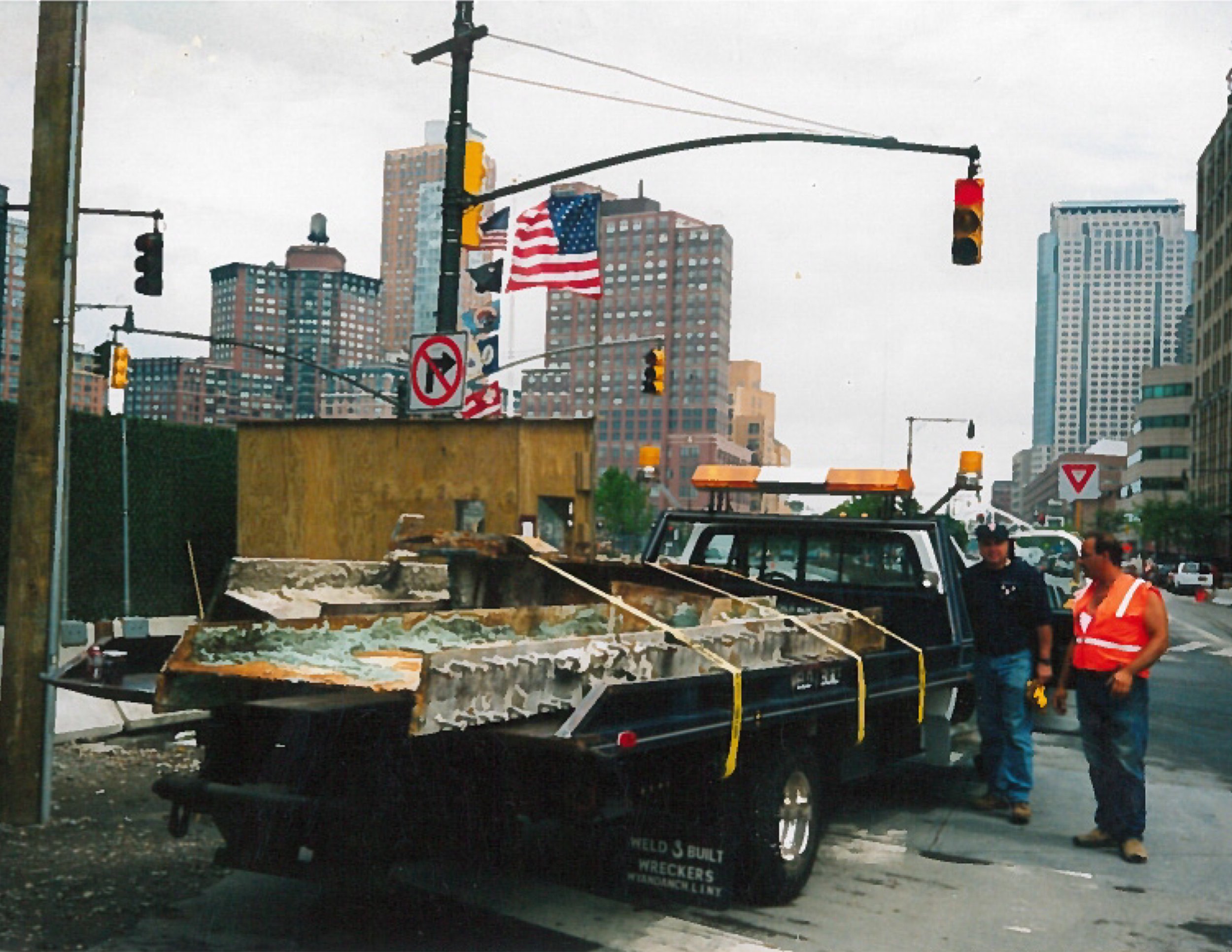
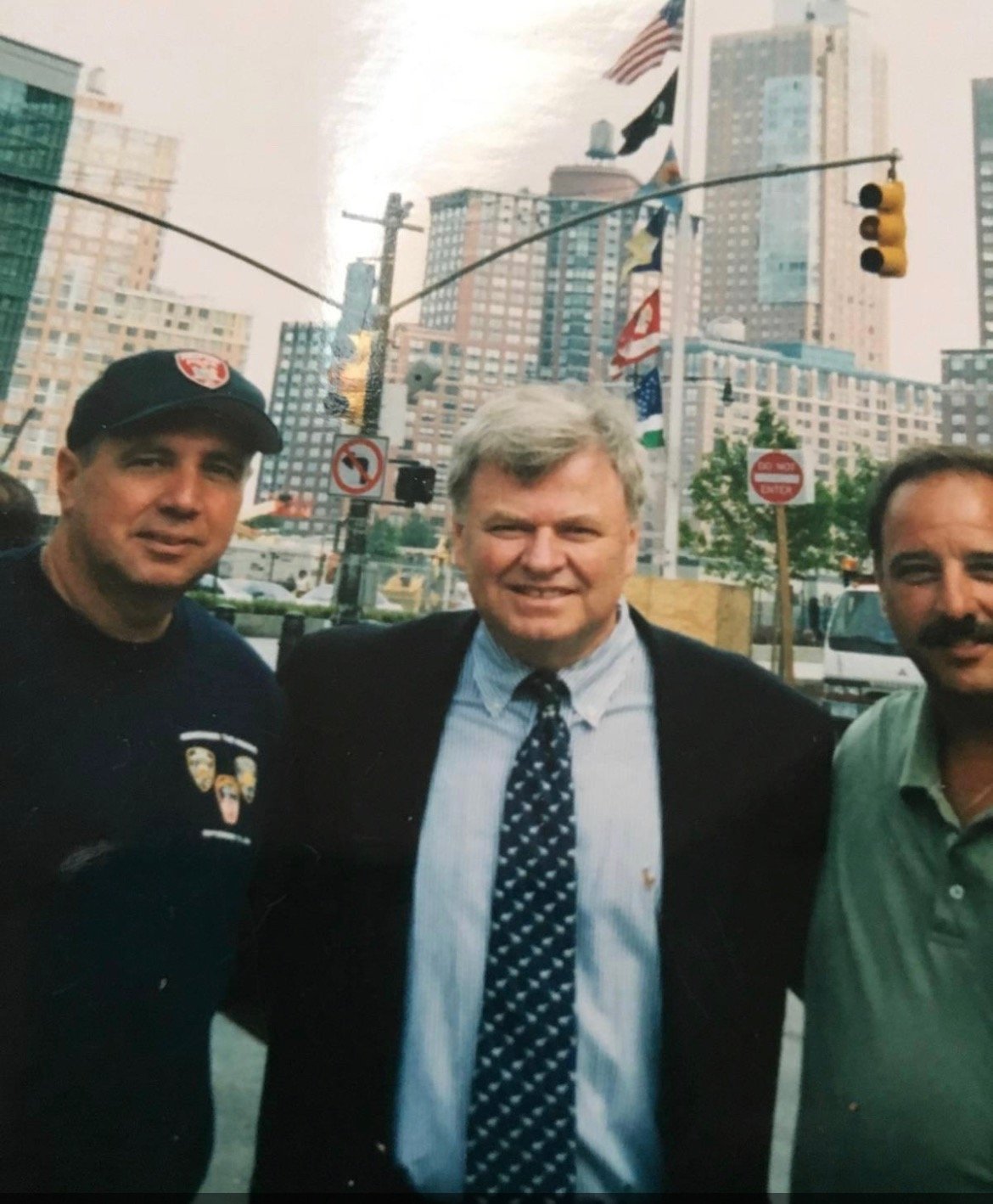
Freeport Police Department Detective Sergeant Michael Capiola, who also served as Director of the Freeport Police Benevolent Association Shooting Range, requested World Trade Center steel from the New York City Fire Department for use in a monument honoring WTC first responders at the range.

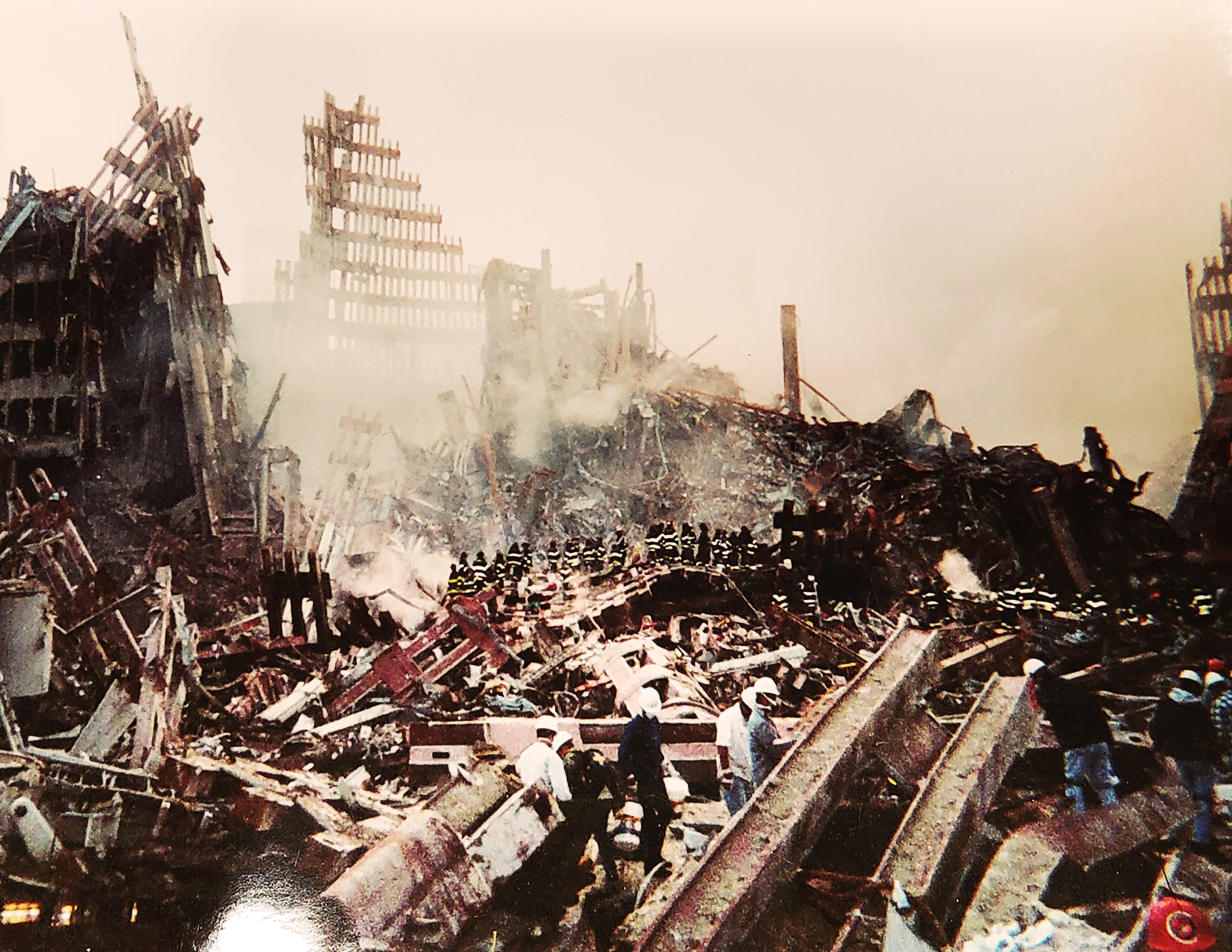
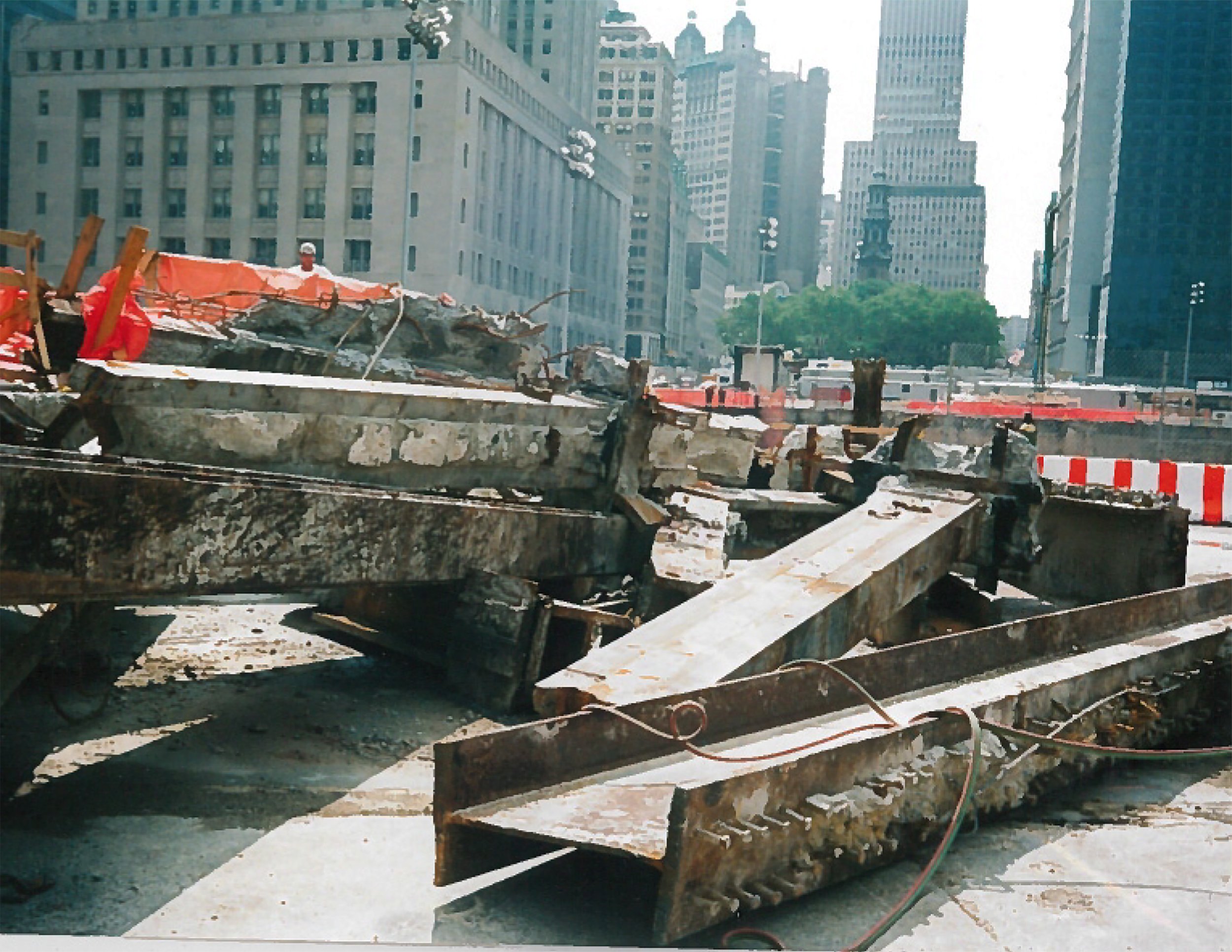
The request was granted. In January 2002, Capiola traveled to the World Trade Center site, where he met with Thomas Von Essen. He received two 30-foot beams and several smaller pieces that he was told came from the North Tower. Capiola personally transported the material to Freeport.
2002
The Freeport monument

The two large beams were used to create the first-responder monument now displayed at the shooting range in Freeport. The remaining smaller pieces stayed in Capiola’s sole possession until January 2017.

2017
The first Gotham Armory transfer

Through a colleague at The Specialists, Capiola was introduced to Sam Glen, a Desert Storm veteran and principal of Gotham Armory. Glen had long sought World Trade Center steel for the creation of appropriate commemorative objects after volunteering at Ground Zero following September 11, 2001.

On January 14, 2017, Capiola gifted Gotham Armory two pieces of the steel weighing a combined 160 pounds. Glen personally transported the material to The Specialists in New York City, where it was placed in a secure vault.

2018
An additional piece preserved

In 2018, Capiola gifted Glen and Gotham Armory an additional 27-pound piece of World Trade Center steel. Glen again personally transported the material to the secure vault at The Specialists, preserving its custody before the next stage of analysis and development.

Original Custodian
Michael Capiola

Freeport Police Department Detective Sergeant and Director of the Freeport Police Benevolent Association Shooting Range. Capiola obtained, transported and preserved the steel before gifting selected pieces to Gotham Armory.

Gotham Armory
Sam Glen

Desert Storm veteran, Ground Zero volunteer and principal of Gotham Armory. Glen personally received and transported the steel into secure storage for its eventual commemorative transformation.

02
Material Verification & Engineering
Preserving the identity of the steel.

Before the World Trade Center steel could become part of a functioning 1911-style pistol, its composition had to be analyzed and an entirely new manufacturing approach had to be developed. The challenge was not simply to use the material, but to preserve its distinct character and make it visibly recognizable.

Metallurgical Analysis
Understanding the material

Sam Glen cut small samples from the steel while it remained secured in The Specialists’ vault. He personally transported the samples to Element Materials Technology in Newtown, Pennsylvania, where they underwent spectrographic analysis.

Manufacturing Consultation
Engineering a working pistol

Glen consulted with experienced firearms-manufacturing specialists to determine how the World Trade Center steel could be incorporated into pistols produced for Gotham Armory under an ATF manufacturing variance. Testing confirmed that the construction-grade steel was not sufficiently strong to serve alone as the pistol’s structural material. It would need to be combined with stronger, purpose-appropriate steels while preserving the historic material’s distinct character and identity.

The Essential Decision
Incorporate the steel without erasing what made it singular.
Considered
Homogenized steel

One possibility was to melt or mix the World Trade Center material with a stronger steel. Although technically straightforward, that approach would have homogenized the material and erased its separate visual identity.

Selected
Layered Damascus

Instead, the WTC steel would be layered between three other steels through a specialized Damascus process. This approach could provide the required performance while allowing the historic material to remain visibly and materially distinct.

Specialized Collaboration
Element Materials Technology
Metallurgical Testing

Conducted spectrographic analysis of samples from the World Trade Center steel in Newtown, Pennsylvania.

"One of the finest 1911 builders"
Pistol Manufacturing

Consulted on the engineering and manufacturing requirements for incorporating the material into a 1911-style platform.

Rob Dekelbaum
Damascus Development

The renowned bladesmith and Damascus specialist recommended to develop a unique formula capable of preserving the WTC steel as visibly distinct layers.

03
Transformation into Damascus
From historic steel to working material.

Through repeated experimentation, rolling and precision smithing, the World Trade Center steel was transformed into a material suitable for the GA911 while preserving its visible identity within the final Damascus pattern.

Formula Development
The historic material remained untouched during development.

Rob Dekelbaum developed the specialized Damascus design through numerous iterations using construction steel of a similar grade and chemical composition. Prototypes were produced and tested with this comparable material while the actual World Trade Center steel remained secured in The Specialists’ vault. Only after a viable formula and the necessary specifications were finalized did the historic steel proceed to rolling.

20 hours
Time in the rolling mill oven
2,000°F
Approximate rolling temperature
3″ → ⅛″
Reduction in material thickness
The Rolling Process
A controlled transformation with custody maintained at every stage.
01
Transported

Sam Glen personally transported the World Trade Center steel from secure storage to Niagara Specialty Rolling Mill in Niagara, New York.

02
Heated & Rolled

The steel was cut, heated for approximately 20 hours until it reached 2,000°F, and rolled from three inches thick to approximately one-eighth inch.

03
Identified & Secured

The rolled material was divided into two transportable pieces. Glen and Dekelbaum received it directly at the mill, marked the pieces for identification and loaded them for transport.

04
Prepared for Forging

The material was transported to Dekelbaum’s Hanover, Pennsylvania workshop, secured and later sheared into smaller pieces in preparation for conversion into Damascus billets.

→
Direct custody throughout the process

Glen and Dekelbaum received the rolled steel directly from Niagara Specialty Rolling Mill. Dekelbaum personally transported it to his Hanover workshop, where it was maintained in a secure area through the subsequent preparation and smithing stages.

Ready for Damascus Forging

These pieces of World Trade Center steel would become the Damascus billets from which the GA911 was created.